| Items: | Qty | Total | |
|---|---|---|---|

|
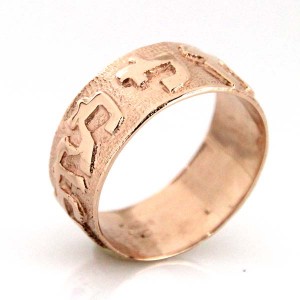
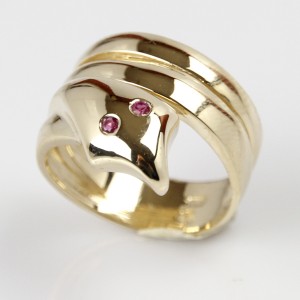
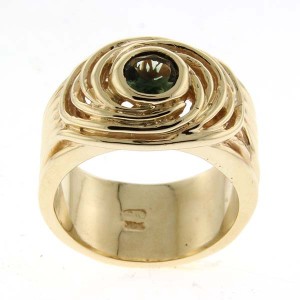
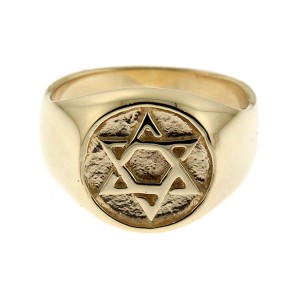
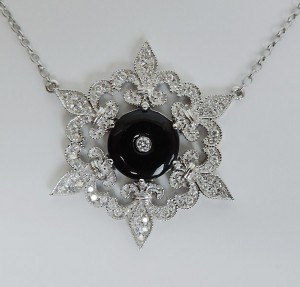
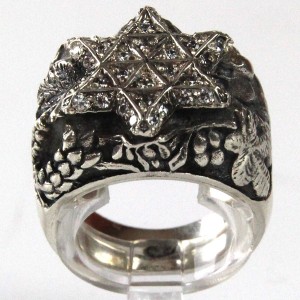
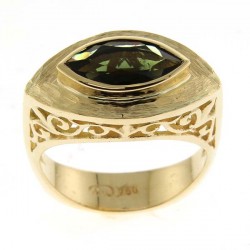
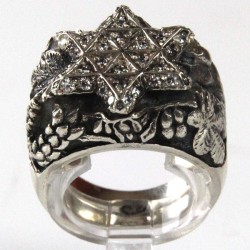
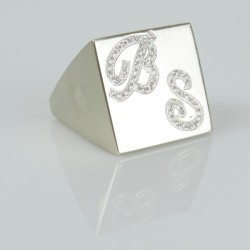
14k Gold & Diamond Signet Ring | 1 | $2,400 |
TOTAL$2,400
| Items: | Qty | Total | |
|---|---|---|---|
|
|
14k Gold & Diamond Signet Ring | 1 | $2,400 |
TOTAL$2,400

a leading and outstanding Israeli artist and sculptor, was born in Jerusalem in 1938 to Polish immigrant working-class parents.
He is today one of Israel’s most prominent and exceptional artists to have attained international recognition.
His unique personal style and multi-faceted art work mediums employed by him have greatly contributed to his unqualified success in a wide range of diversified art forms.
Weishoff’s work, in the artist’s unique manner, merges the old and the new, the ancient and the modern, thus capturing the land of the Bible’s history and spirit.
The artist first achieved international exposure and recognition in 1971, when his oil paintings were selected to decorate the El Al Airlines calender, and through his paintings and artistic works being published worldwide by the Israeli Ministry of Tourism.
In 1992, the artist’s oil paintings, dedicated to themes of nature and landscape in Israel, were exhibited at the Israeli Knesset in Jerusalem.
Weishoff has a special gift for capturing the spirit of his country and he has exquisitely portrayed his magical experience of Israeli life in, original, hand-pulled, serigraphs.
These prints have been produced in a limited edition, signed and numbered by the artist.
Weishoff’s sculptures are located in popular town squares and avenues and adorn distinguished public buildings.
The artist’s environmental sculptures are in great demand by municipalities, entrepreneurs and governmental instances.
The artist’s mural high relief may be viewed at Ben-Gurion International Airport and one of his monuments, commemorating the victims of a terrorist attack, is located in the heart of Tel Aviv.
The struggle for independence is depicted by the artist’s work Rebirth”, a sculpture located in Rishon le Zion and adorned by 14 high reliefs depicting historical events which occured prior to the establishment of the State of Israel.
Weishoff’s sculpture “Shalom” located in Rabin Square, Rishon le Zion, is a reflection of mankind’s yearning for peace in accordance with Isiah’s prophecy.
“The Gates”, an environmental sculpture by the artist located at the promenade entry to a mediterranian beach, attract and enthral it’s many visitors.
The kinetic sculpture by Weishoff “Birth of a Sphere”, is located in the main lobby of the Miami based Carnival Cruise Lines Superliner, The Sensation”, surrounded by 12 murals by the artist.
“The Seven Species Menorah” sculptured by Weishoff, which is located in the lobby of the Knesset, was dedicated to the 50th anniversary of the Knesset.
A model of this sculpture was presented to His Holiness Pope John Paul II.
Weishoff’s sculpture of the late Prime Minister Rabin was presented to President Clinton by Mrs. Lea Rabin.
Weishoff has recently completed a novel series of animal sculptures cast in bronze, with a colored patina finish.
The humorous personalities of the animals are styled by the artist with tender loving care.
The series has been produced in a limited edition, signed and numbered by the artist.
Weishoff has represented Israel in the planning and design of Israeli pavilions for various international exhibitions and fairs, among which, the International Air Show at Le Bourget, Paris.
His design, planning and construction of museums and tourist centers, among which, the Etzel Museum” and the “House of Bialik Museum”, dedicated to the former Israeli national poet, will stand future generations in good stead.
As a leading Israeli designer, Weishoff has frequently been commissioned by the Bank of Israel, the Israeli Government Coins and Medals Corporation and foreign mints to design and sculpture their coins, medals and banknotes.
The design and production of gold medals for the United Nations to commemorate its 40th anniversary, which ranks among the artist’s most recent works, is particularly noteworthy.
Weishoff’s artistic medals were also exhibited at the FIDEM exhibition, Weimar 2000, Germany.
The artist has also designed and painted numerous stamps for Israel, the United Nations and various other countries and has become well known among stamp collectors the world over.
His coin and medal designs are distributed mainly by the Israel Government Coins and Medals Corporation.
Many pieces of jewelry designed by the artist utilizing his specialized know-how in metals, gems and various other kinds of materials, while exploiting his sophisticated techniques, are on display at H. Stern Jewelers and various other prestigious jewelry shops and boutiques.
Weishoff’s unique and superb artistic talent has facilitated his frequent and successful participation in numerous local and international art exhibitions.
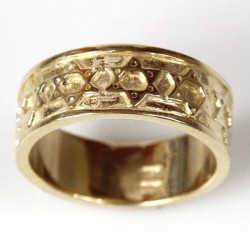
The Star of David (Magen David / Shield of David) is the most commonly associated symbol with Judaism today, but it is actually a relatively new Jewish symbol.
It is supposed to represent the shape of King David’s shield (or perhaps the emblem on it), but there is really no support for that claim in any early rabbinic literature.
In fact, the symbol is so rare in early Jewish literature and artwork that art dealers suspect forgery if they find the symbol in early works.
When Theodor Herzl looked for a symbol for the new Zionist movement, he chose the Star of David because it was so well known and also because it had no religious associations.
In time, it appeared in the center of the flag of the new Jewish state of Israel and has become associated with national redemption.
Scholars such as Franz Rosenzweig have attributed deep theological significance to the symbol.
For example, some note that the top triangle strives upward, toward God, while the lower triangle strives downward, toward the real world.
Some note that the intertwining makes the triangles inseparable, like the Jewish people.
Some say that the three sides represent the three types of Jews: Kohanim, Levites and Israel.
While these theories are theologically interesting, they have little basis in historical fact.
The symbol of intertwined equilateral triangles is a common one in the Middle East and North Africa, and is thought to bring good luck.
It appears occasionally in early Jewish artwork, but never as an exclusively Jewish symbol.
The nearest thing to an “official” Jewish symbol at the time was the menorah.
In the middle ages, Jews often were required to wear badges to identify themselves as Jews, much as they were in Nazi Germany, but these Jewish badges were not always the familiar Star of David.
For example, a fifteenth century painting by Nuno Goncalves features a rabbi wearing a six-pointed badge that looks more or less like an asterisk.
In the 17th century, it became a popular practice to put Stars of David on the outside of synagogues, to identify them as Jewish houses of worship in much the same way that a cross identified a Christian house of worship; however, I have never seen any explanation of why this symbol was chosen, rather than some other symbol.
The Star of David gained popularity as a symbol of Judaism when it was adopted as the emblem of the Zionist movement in 1897, but the symbol continued to be controversial for many years afterward.
When the modern state of Israel was founded, there was much debate over whether this symbol should be used on the flag.
Today, the Star of David is a universally recognized symbol of Jewry.
It appears on the flag of the state of Israel, and the Israeli equivalent of the Red Cross is known as the Magen David Adom.
The firm was producing metal ware in different styles:
* Classical
* Art Nouveau (Jugendstil)
* Art Deco
* Celtic / Viking revival
* Bauhaus
* Hotel ware
Click here to view our WMF items.
The Celtic / Viking revival style was introduced to compare against the English Arts & Crafts movement.
During the First World War, Hugo Debach, who would later become director-general of WMF, took the initiative in having experiments conducted in chemical and thermal tinting of metals. Shortly before 1927 he founded the Neue Kunstgewerbliche Abteilung (NKA: New Division for the Applied Arts) at WMF for upgrading metals. The brilliant colors and the boundless possibilities for design arising from this new technique met with resounding success at the time
1853 – The Founding of the Company
In 1853, Daniel Straub, a miller from Geislingen, joined forces with the Schweizer Brothers to form the “Metallwarenfabrik Straub & Schweizer” in Geislingen. This was the second company to be founded by Straub – previously in 1850, from the nucleus of a small repair workshop, which he had set up to work on the construction of Geislingen’s famous railway incline, he had founded the Maschinenfabrik Geislingen. This company was involved mainly in manufacturing mill turbines and traded throughout Europe.
1862 – The First Award
As early as 1862, the young company distinguished itself by winning a gold medal at the World Exhibition in London. In 1866, following the departure of the brothers Louis and Friedrich Schweizer, the company was renamed “Straub & Sohn” (Straub & Son). The company showroom, built in 1868 in Berlin, gradually evolved to become the company’s first retail outlet. Three years later, the company was already employing 60 workers. By 1880, the number of employees had grown to approximately 200 and the company was already producing 960 different items.
1880 – Foundation of WMF
1880 saw the merger between Straub & Sohn and “Ritter & Co.”, Esslingen, to form a public limited company under the name of W?rttembergische Metallwarenfabrik. At the time of the merger, Ritter & Co.’s Esslingen factory was already using the electroplating method of silver plating and had the more modern production facilities at its disposal. Straub’s company, on the other hand, was the more profitable of the two.
1883 – Glassworks
Further development occurred with the construction of the glassworks in 1883 on the Geislingen factory site to enable the company to produce its own glass inserts for tea glasses, vases etc.
1887 – Social Benefits with a Tradition
WMF’s Welfare Association was founded in 1887 and provided a programme of social benefits for the workers which far exceeded usual levels at that time. These benefits included a company health insurance scheme (which nowadays has approximately 17,000 insured members), a hardship fund, company housing, distribution of subsidized food products, a company bathhouse and a savings bank. In addition, the Welfare Association was responsible in 1890 for launching one of Germany’s first house journals “Die Feierstunde” (The Leisure Hour), which is still published today under the title “WMF Spiegel” (WMF Mirror).
1890 – Early Diversification
WMF diversified its interests from its earliest days. An example of this is the takeover of the Galvanoplastischen Kunstanstalt (Galvanoplasty Art Institute) in Munich, the production facilities of which were moved to Geislingen in 1894 and remained there until 1950. Their range included burial memorials, ornamental statues for the home and decorative objects for buildings, replicas of works of art, especially from the Renaissance period, and copies of ancient archaeological finds. The most famous piece is the reproduction of the portal to the Baptistery in Florence. The “Gate of Paradise” by Lorenzo Ghiberti, as it is known, is nowadays on display at WMF’s Headquarters in Geislingen.
1892 – The Patented Silver plating Process
1892 saw the development of a special technique for silver plating cutlery, whereby the silver is distributed in a way that, at the points of the cutlery most exposed to wear and tear, the coating is twice as thick as elsewhere. This process was patented and is still in use today. Known nowadays as “Perfect Hard Silver plating” the technique remains exclusive to WMF.
1900 – WMF becomes an International Company
Under Carl H?gele the company gained international standing. At the turn of the century the factory in Geislingen employed 3,000 workers. By 1910, this number had already grown to 4,000, making WMF the largest company in W?rttemberg at this time. Sales catalogues were printed in twelve languages. Subsidiary companies in London, Warsaw and Vienna opened up export markets.
1905 Art Nouveau
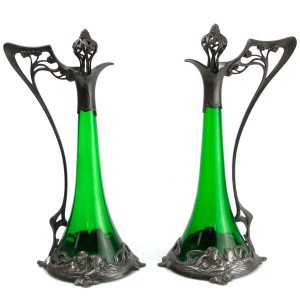
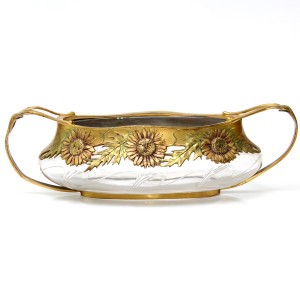
Under the direction of Albert Mayer the WMF studio was influenced by the art nouveau style. The product range was modernized and considerably extended. In 1905 WMF acquired a majority holding of the Cologne Company Orivit AG, which manufactured products from “Orivit”, a tin alloy.
1920 Cutlery Becomes Increasingly Important
In the years following the First World War, cutlery increased its share within the range, reaching 60% of the total turnover. In 1920 Silit Cookware of Siemens- Martin (open hearth) steel was launched
1925 Decorative Art Production
As of 1925, products created by the Contemporary Decorative Products Department (NKA) made their debut on the market. This department was set up under the direction of Hugo Debach in order to establish the name of WMF amongst consumers interested in art and design. This department was responsible for producing the special “Ikora” finish, which has earned an important place in the annals of art history. The “Ikora” brand name referred to a specific method of treating the surface of the metal, by which layers of coating were applied in a partly chemical and partly heat induced process. A host of newly developed hand-finishing techniques enhanced the possibilities for adding decorative flourishes to the products. Despite being mass produced, every item looked as if it had been individually crafted.
1927 Cromargan
A decisive factor in the company’s history was the securing of exclusive rights to use the special V2A steel, developed by Krupp, for the production of WMF table and kitchenware items. This material was registered under the name of Cromargan, which is nowadays synonymous with 18/10 stainless steel. WMF launched its first Cromargan® cookware range at the Leipzig Trade Fair in 1927, followed a few years later by the introduction of the first Cromargan cutlery.
1930 Company Owned Retail Network Extended
As a result of the breakdown of the export markets, brought about by the world recession, a new sales strategy was developed with a strong dependence on the domestic market. In this context the number of company owned retail outlets increased from 24 to more than 130 by the end of the thirties. Hence the basis of today’s 150 WMF retail outlets was laid. Alongside this were rationalization measures such as the closure of subsidiary works. Following the closure of the manufacturing site in G?ppingen, production of commercial coffee machines moved to Geislingen in 1932.
1935 Ceramic Workshop
The Contemporary Decorative Products Department (NKA) was expanded with the presence of a ceramic workshop. The ceramic department, which employed 100 workers up to the beginning of the war, further strengthened WMF’s reputation as a creative design company, without primarily focusing on turnover.
1945 – A New Start
At the end of the war the company had lost its foreign assets, associated factories and retail outlets. The years following 1945 saw the start of a concerted effort to reconstruct in terms of personnel, organizational structures and technology in the remaining factory sites. The network of retail shops was rebuilt. Very soon, subsidiaries sprang up in the USA, Holland, Canada, Switzerland, Austria and Italy.
1950 – Cromargan Conquers the Market
By 1950, WMF staff numbers had again swelled to 3,000. Silverplated tableware and cutlery accounted for two thirds of WMF’s turnover, with shops specialising in clocks and watches, gold and silverware representing the company’s main customers. A shift in emphasis occurred at the end of the 1950s and was marked by an increase in the importance of Cromargan cutlery and hollowware. This period saw the creation of classic products, such as designed by Wilhelm Wagenfeld, which still feature in or have been reintroduced into the WMF collection. It also saw an increase in the volume of trade in household and kitchenware items between WMF and specialist retail shops. A number of stemware collections completed the WMF catalogue, followed by the development of an extensive range of products for the hotel and catering industry.
1960 – Further Expansion
By 1960, the Geislingen factory alone employed around 5,800 workers. A shortage of space and manpower at this site led to the setting up of additional branch factories, like the factory in Hayingen and Riedlingen.
2003 – 150 years of WMF
WMF celebrates its 150th birthday. WMF has grown from the small plaque factory, Straub & Schweizer, into an international organization with 5,500 employees. Even in times of economic difficulty WMF has maintained its position with flexibility, and far-sighted business decisions, which have not been without risk. As a modern design conscious business the organization is well equipped for the future.
THE DESIGNERS
Between 1900 and 1907 many art nouveau designs went into production, some by well-known designers like Albin M?ller and Peter Behrens. Albert Mayer, the artistic director, was the person who was responsible for these changes. The international success and the resulting economic profit gave room for experimenting with new techniques and for developing a different line of decorative products for a new group of clients without the need for instant profitability. Hugo Debach (director since 1904) established the “Neue kunstgewerbliche Abteilung” (NKA) in 1925. As a result of this some new technical innovations in the field of glass and metal were made followed by further innovations in 1935 when a ceramic studio was added to the NKA. It was also Hugo Debach who brought Karl Wiedmann and ceramics expert Gerda Conitz to the WMF. During these years there were also quite some well-known designer like Prof. Fritz August Breuhaus de Groot, Prof. Richard Riemerschmid and Prof. Paul Haustein working as freelance designers for the WMF. In the 1950s also Prof. Wilhelm Wagenfeld designed for the firm.
Click here to view our Hanukkah Menorahs.
Hanukkah Holiday in the Jewish tradition
Hanukkah is a mid-winter-festival of warmth and light, celebrating the rededication of the home environment at the darkest time of the year. It commemorates the victory of the oppressed Judaeans, under their leader Judas Maccabeus, over the Greeks who had conquered the Jewish homeland and had set up a pagan cult in the Temple of Jerusalem.
The beginning of the feast marks the day the victorious Maccabees entered the cleansed Temple for the rededication – which is the meaning of the word Hanukkah. It lasts eight days because the single cruse of consecrated oil that they found was miraculously sufficient to light the large Temple candelabrum for eight days, until more special oil could be prepared by the persists.
The idea that the home is a sanctuary, and that it survives hard times unscathed, its crucial to this festival. The main activities are the exchanging of gifts and the kindling of the candelabra with eight lights both in the synagogue and in the home after nightfall on each evening. A single light is lit on the first night, and another added each evening until all eight are burning. A ninth flame is set slightly apart from the others and is used to light them.
The Jewish Menorah Lighting Ceremony
There is a brief but moving ceremony for lighting the Jewish Menorah, which is called a “Menorah” (lamp) or in Modern Hebrew a Hanukkkiya. In most familiar each person has his or her own Jewish Menorah to light. Everyone stands holding the servant light (called a Shammes or Shamosh by Ashkenazi Jewish, or a Shammash by Sephardics), while blessing over the festival and the lights are recited. There follows a brief prayer as the Jewish Menorah’s are lit. Most families then sing a hymn of thanks for the struggles of liberation fought by Jews throughout their history. The candelabra are usually lit in the window, so that they can be seen from outside.
The Jewish Menorah as a collectible Item
The Hanukkah Jewish Menorah lamp is favorite genre among collectors for a number of reasons.
When it is not in use, the Jewish Menorah is often kept on display in the home, so it is a familiar object that has acquired considerable symbolic importance.
Collectors are perhaps most attracted, however, by the sheer variety of styles available from almost every region in Europe and Asia, Jewish Menorah lamps are made in materials as varied as silver, brass, bronze, copper, pewter, ceramics and glass.
They also survive from almost every period, and collectors have no difficulty finding examples from the late Renaissance – the sixteenth and seventeenth centuries – and gradually purchasing a series including specimens of each type dating from then until the present day.
Contemporary artists are still producing interesting pieces.
Most Jewish Menorah lamps from Mediterranean countries are fuelled by olive or other vegetable oils.
Candles have been increasingly popular since the seventeenth century in Northern Europe and are now the most common form of lighting, although some modern makers have chosen to return to oil.
The revival of old methods has been matched by a trend towards innovation in materials such as new heat-resistant forms of glass.
Such is the popularity of the Hanukkah and its ceremonial Jewish Menorah lamps, that several monographs and catalogues have been produced on them.
Best known is the work of the famous scholar Mordecai Narkiss, whose illustrated publications appeared in Hebrew in 1939. But all such works should be treated with discretion since they have been plundered in recent years for designs to reproduce.
The resulting copies are often hard to distinguish from the authentic objects, all the more so since many bronze and brass designs were themselves manufactured over a long period between the mid-eighteenth and the nineteenth centuries, so show many slight variations.
It is therefore essential to resist the temptation to use published photographs as evidence that a piece is authentic, for the similarity may in fact prove the opposite of what is hoped: you may have a copy taken from the very photograph you believe establishes the authenticity of the piece.
Similarly, the fact that examples of a style are absent from the published literature has been used to show that the style is simple not genuine.
Many rare and interesting objects have been rejected because of the over-reliance on published material. Every collector should remember that a description and a photograph are not a substitute for real expertise.
A few genuine Jewish Menorah lamps have survived since the middle ages, but are extremely rare.
They are usually identified as Franco-German, and are dated to between the Twelfth and the fifteenth centuries. They are typically of bronze, with a triangular backplate pierced in a motif that resembles a Gothic rose window. The style was widely reproduced in the late nineteenth century when the demand for medieval objects of all kinds was met by a prodigious amount of copying.
If you wish to be sure about the authenticity of a piece, have to wear, patina and construction examined by a specialist in metalwork of the medieval period.
Every major museum employs one on its staff. Genuine examples have not appeared on the market for many years, but some no doubt lie unrecognized in dark cellars. It would be a major achievement to discover one.
Antique Italian Jewish Menorahs
The earliest pieces available to the collector come from Italy.
Fine bronze castings played a major role in Italian art of the sixteenth and seventeenth centuries, and Jewish Menorah lamps were cast there in considerable numbers.
They have a cartouche-shaped backplate with pierced and chased decoration.
Popular themes include elaborate scrolled foliage, occasionally inhabited by putty, or just by their heads, by fantastic monster and grotesques, herms and fruit clusters.
All these are borrowed from the Renaissance ornament of the period.
One particularly popular scene, often found on European Jewish Menorah lamps of this type from the seventeenth and eighteenth centuries, is Judith holding the head of Holofernes.
Judith was biblical heroine who beheaded a Babylonian general while he slept.
The was included on Jewish Menorahs, perhaps because her name is the female form of “Judah” or “Judas” – the guerrilla leader who provides the focal point of the festival.
She usually appears standing, with a sword in her right hand and a severed had in the left.
A little dog that appears in the story is also sometimes included.
The backplates are lit by a row of eight oil pans, each with a circular well and protruding lip to receive the wick.
The row of pans is cast separately and is secured by projections which fit into slots in the backplate.
The projections are locked into place by pins.
One sometimes also finds the single matching pan for the servant light, which fits into a slot situated near the top, either in the center or to one side, and is pinned in a similar way.
More often the slot alone remains, although when the servant light is lost it is frequently replaced with a copy. This is a common and quite acceptable repair.
More radical modifications than this, however, tend to reduce the value of a piece.
It is important to check the color of the bronze from which the oil pans are made, and to make sure that the patina and wear match that of the backplate.
The row of pans may have been taken from another Jewish Menorah lamp of the right period, but this is very hard to detect.
It is not as damaging to the value of a piece as a completely modern replacement.
The dating is made harder by the fact that most Jewish Menorah lamps were cast from a common model and sometimes from each other, without any marking, as was the case with silver examples.
Old Jewish Menorah lamps seem to be dated almost randomly to the sixteenth and seventeenth, or the seventeenth and eighteenth centuries.
Many of them are in fact later.
Only a thorough knowledge of the bronzework of Italy at this period can guide you through the problems of dating.
If you do not know the field you should go to someone who does.
A knowledge of the secular prototypes is extremely important.
Antique Polish Jewish Menorahs
Poland and the Prussian and Baltic regions of Germany are famous for their brass Jewish menorahs.
Free standing examples survive from the seventeenth century, although there is some doubt about their dating, as there is for all base-metal examples.
They are decorated with elaborate scrollwork on the upper sections – most are of the branch-and-stem type – and the scrolling terminates in prickets or candleholders often of large size and huge weight.
Those up to 5 feet (1.5m) in height and must have been intended for use in a synagogue.
They were influenced by Christian candlesticks of the same periods.
An eagle is a common decorative motif, as are lions sejant which often serve as supports for the stepped or domed circular base.
This form of Jewish Menorah lamp was made throughout the eighteenth and nineteenth centuries and was copied in the twentieth century.
The best signs of age are the degree of wear due to cleaning and the size and quality of the screws that join the separately cast parts.
The earlier screws tend to be large, with irregular, hand-filed thread, and often have a dot punched in the in order to center the screw itself.
This in particular is a reliable sign of age.
Jewish menorahs from the first half of the nineteenth century are recognized by the simplicity f the design and the thinness of the connecting screws.
All these Jewish Menorah lamps are beautiful and significant, but they are not easy to house, so their very size keeps the prices relatively low.
The Jewish Menorah Backplates
The chief glories of Polish brass Jewish Menorahs are of the backplate variety.
The plates themselves are cast and pierced.
The Jewish Menorah lamps were made from the late seventeenth until the early nineteenth century.
Age can be detected by the overall massiveness of the construction, by the degree of elaboration, by the wear and by the size and precision of the joining screws.
Copies can be spotted by the shape edges and pitted surfaces, especially on the back.
The backplate tends to be of delicately scrolled tracery including a variety of motifs.
Most popular are stags, lions, griffins, crowns and birds – particularly eagles.
Meandering branches are even likely to end in serpent heads.
Most Jewish Menorah lamps also have decoratively pierced side panels, usually in a latticework style.
Sometimes there is a pierced gallery of similar design in front of the oil fonts of candleholders.
The servant lights, in the form of large candle-holders, appear at each end, or more usually slightly above the others.
It is useful, in the cast of such complex models, to check your piece against published examples to see if there are any sections missing.
The front gallery or servant lights have often disappeared.
These Jewish menorahs are a firm favorite of collectors, who recognize their solid dignity and the wealth of variety in design.
Various Silver Jewish Menorah Styles
Polish silver examples are also much sought after.
A particularly popular version was made in the region of Lvov (Lemberg) during the first half of the nineteenth century.
It is known as the Baal Shem Tov type, after the charismatic founder of the mystic Hasidic movement who was said to have owned one.
The backplate is shaped like a broad cartouche. Its thin silver is sometimes gilded, but usually decorated with filigree motifs including scrolls containing either a double-header eagle or an arched double doorway that sometimes open to show a miniature Torah scroll.
Other motifs include open flowers, pillars, crowns and birds.
The front is set with eight oil-containers in the form of miniature jugs, and there is usually a pair of servant lights, each with scrolling filigree stem supporting a candleholder. The Jewish Menorah lamp stands on a number of spindly scroll supports.
The front section supporting the oil-jugs is always engraved with a diamond-shaped pattern and hallmarks may be found there also.
These Jewish Menorah lamps come in a number of sizes, and range from about 8 inches (20cm) to about 20inches (50cm) in length.
Their value depends on their size, ornateness and condition – they are far more fragile than the brass versions, so tare less often in a perfect state. There are a number of variations in the basic design, most of them fairly straightforward.
One model, however, has a watch-face in the center, and can range up to 4 feet (1.2m) in height.
These are a great rarity and command very high prices. A classic style of Jewish Menorah lamp was produced in Warsaw, mostly between about 1830 and the end of the century.
Its backplate is in the shape of a squarish cartouche, and id generally of solid metal, without any piercing or applied filigree.
It is often embossed with a vignette of a bird sitting in a bowl of fruit.
The upper section bears a crown flanked by birds and flowers.
Example of the Prague Jewish Menorahs are still occasionally found for sale.
These brass Jewish Menorah lamps originated in the eighteenths century and continued to be made during the nineteenth.
Their horizontal rectangular backplate is pierced with scrolling foliage among trelliswork.
The top or the sides bear a Star of David, at the center of which appears a hat.
This detail may pass unnoticed unless you are looking for it, but the motif has an interesting history.
The badge was granted for use by the Jewish of Prague by the Habsburg Emperor Ferdinand II, when the Jews helped to defend the city against an invading Swedish army.
The hat is in the style of those of the enemy soldiers.
The sides of the Jewish Menorah lamp bear depictions of Moses and Aaron.
Between them is a row of oil-pans shaped like spoons.
The age of these Jewish menorahs can be discovered using the same criteria as for the Polish brass Jewish Menorah lamps.
Antique Austrian Jewish Menorahs
Austrian Jewish Menorahs are usually of silver and made in Vienna.
The most characteristic forms, which were made throughout the nineteenth century, have a hemispherical backplate which is pierced and chased with Rococo-style flowers and foliage.
At its center a pair of lions flanks the Decalogue.
The detachable row of oil-pans is shaped like a series of spoons – in fact spoons were often used in making the earlier examples.
The whole Jewish menorah is set on high, Rococo-style scroll supports.
There are a number of interesting variants, including one with a peacock motif which is most rare, and another, which is less so, whose backplate is pierced with Gothic arched and trelliswork, at the center of which is a crowned Decalogue.
Antique Dutch Jewish Menorahs
Holland is famous for its brass Jewish Menorahs, much sought after by collectors.
Most are of sheet brass, unlike the Eastern European type which are usually cast.
They have squarish backplates with scalloped tops, and are decorated with piercing, punchwork and embossing in variety of designs.
These include tulips and other flowers, birds, Stars of David, candelabra and the word Hanukkah in Hebrew.
They often have a splendid patina, built up by regular polishing ever since they were made between the mid-seventeenth and the end of the eighteenth centuries.
The metal may have worn quite thin in places, and holes may even have been left in raised parts of the design.
They range in size from about 8in (20cm) to 16in (40cm) in length.
The oldest of them have the most complex and delicate decoration.
Antique Near Eastern, Palestine & Bezalel Jewish Menorahs
Some particularly attractive Jewish Menorahs have been produced in the Near East.
Reflectors in the form of glass set into brass rings are characteristic, as are backplates decorated with stars and crescents, and with the Hamsa, the sign of the hand which is an important symbol of Islam.
These are characteristic of both Syria and Iraq.
Iraqi ones tend to be entirely of brass, while Syrian examples are often of brass decoratively inlaid with copper or silver – a technique known to Damascus work.
The cross-cultural borrowing in Near-Eastern Jewish Menorahs is particularly complex, making their date and place of manufacture difficult to trace.
The twentieth century is notable for the work of the Bezalel School in Jerusalem, which operated between 1909 and 1926. Their Jewish Menorah lamps are in stamped brass and silver, with backplates often decorated with attractive vignettes from the Hanukkah story. The designs are mostly by Raban and other artists. Other modern work is covered in my discussion of Bezalel and other modern artists, such as Schatz, Wolpert and Zabari, whose output draws on the full range of traditional themes and styles.
A last word of warning.
1. How to remove excess wax from candleholders?
It is best to remove the hot wax drippings as soon as possible, but if this cannot be done, the candleholder should then be placed in hot water for a few minutes, so that the wax will become warm and be easily removed. Since silver is a metal, it transmits heat, so please be very careful when handling. Remember also to wipe all the excess water immediately with a soft dry cloth so no drop stains will remain.
Rule Number 1
The thickness of the silver – In low-quality silverware, it is possible to find tiny “crevices” and cracks in the silver behind the embossing. These crevices could be caused by the low grade, thinness and low weight of the silver, which is affected when it is bent. High-grade silverware, made of thicker silver, will not have any crevices or cracks. Checking for this is easy and simple, just pick up the item and look at its back or bottom through the light.
2. Why does silverware turn black?
Silver is a precious metal that has the tendency to become yellow and then turn black. This is called oxidation and is a natural process that occurs due to contact of the silver with the air. To preserve silver shiny clean for a long time, we recommend that the objects be softly wiped every two weeks. This will prevent the silver from becoming yellow or black.
Also, we recommend maintaining silverware behind closed glass doors to prevent contact with the air.
Rule Number 2
The quality of all silver must be closely checked. Hold the item in your hands and observe:
The stamp of quality – On every piece of high quality silverware, there must appear a stamp with the number 925 and the manufacturer’s name. The number 925 testifies that the article is made of the highest international standard of quality for sterling silver and that it contains 92.5% of pure silver and 7.5% copper. A reliable manufacturer defines the high quality of his merchandise, since he is solely responsible for the quality of the silver (just as we don’t buy gold in the supermarket, but we go to a reliable shop). The stamp is usually found at the back or the bottom of each item. Look for it.
3. How to clean silverware?
For deep cleansing and perfect shine we recommend using the silver cleaning creams or spray by Hagerty.
Hagerty products are easy to use and have almost no side effects caused by strong scents and excess cream. Hagerty products contain R-22, which creates a protective layer on the silver and therefore delays the oxidation process. Hagerty products don’t harm the silver coating and are Kosher for Pesach and for every day of the year.
Rule number 3
The quality of all silver must be closely checked. Hold the item in your hands and observe:
Joining and soldering – If the signs of joining and soldering can be seen on the silverware, this is proof of the low grade of its finishing process. High-quality silverware is produced in one piece and should have no signs of artificial joining.
4. How to shine silver objects?
To preserve the shine of your silverware, the objects must always be well cleaned and wiped. For this purpose, we recommend using a cleaning preparation and gloves. No sharp utensils or rough cloth should be used when cleaning silver as they could cause scratches on the silver surface.
Clean the items softly and do not use force, particularly when cleaning candelabra or candleholders, which have fine parts and could bend out of shape.
Silverware that comes in contact with food must be washed after each use, especially if it has come in contact with vinegar, wine, lemon or salt. After washing, the object must be wiped dry with a soft cloth.
How to recognize good-quality silver?
Rule Number 4
The quality of all silver must be closely checked. Hold the item in your hands and observe:
Complete design – It is not necessary to be a silverware designer to understand when an object is made of “leftovers” from other objects. The foot could be decorated with flowers, the bottom with grapes and the top with Oriental-style filigree! This is a mixture of low quality leftovers that were made into one single object. A silver object is perfect only when all its parts are made in one complete and uniform design.
5. What gift to buy?
We are now in between the holidays and now the question of what gifts to buy for weddings is here again. A silver object is always a prestigious, practical, beautiful and original gift. It is preserved for many years, it is passed on from one generation to another, and it is dear to the giver as well as the receiver. A silver object can be given for any occasion and according to the available budget.
As a wedding present, when a young couple establishes a new home, is a wonderful opportunity to make a gift of silver. There is a great variety of prices and objects that are suitable for the groom and the bride, like an elegant decorated Kiddush cup with matching dish, candleholders, Havdalah set, a tray for slicing challah, a mezuzah, salt and pepper shakers, vases, trays, etc.
Rule Number 5
The quality of all silver must be closely checked. Hold the item in your hands and observe:
The Smallest Details: the sharpness and depth of the small details in the design also determine the quality of a silver object. The attention given to each dot and each line in the design, together with a perfect finish, is what gives each article its uniqueness and high quality. In order to reach perfection in small details, great care must be given during all stages of design and production. The results are clearly seen, compare a high grade silver item and one where the small details have not received special attention. Your will see the difference.
6. A Goblet of Wine
Although it seems ironic and not many people know it, wine can actually damage the silver coating in a cup, leaving stains that cannot even be removed with the best of silver cleaning preparations. So, immediately after the blessings and the Kiddush are finished, the goblet must be wiped clean with a soft dry cloth. This should be done with all silverware that has come in touch with wine or with other liquids. Most of us are familiar with the small black or rust colored spots that can appear on silver objects. These are caused by the salt contained in water and in wine, therefore silver items should not be submerged in water for a long time. Always keep them dry and shiny.
Rule Number 6
The quality of all silver must be closely checked. Hold the item in your hands and observe:
The finish – how is the finish done on silverware?
Pass your fingers through the outside and edges of the object. Is it sharp and cutting or round and smooth? The finish is a most important part of a silver object, especially in a goblet that is in touch with our mouth. Also, a smooth hard finish strengthens the object and prevents it from losing its shape. A “soft” object will easily bend and shows low quality.
7. Silver – A Prestigious History
Silver has been considered a prestigious and desirable gift since the middle Ages. For thousands of year, silver was the material used for jewelry and other artifacts, and also for commerce and the casting of coins. In the Bible, we find many mentions of silver: Eliezer, Abraham’s slave, gave Rebecca silverware as a gift and Joseph’s silver goblet was hidden in Benjamin’s garments, the women of Israel were asked to borrow silverware from their neighbors, during the exodus, to be used later for many of the temple’s artifacts. All the people of Israel have, throughout the years, considered silver a kind of “sacred commandment” and so silverware become not only an object of adornment but also a symbol of sanctity.
Rule Number 7
The quality of all silver must be closely checked. Hold the item in your hands and observe:
The Collection – Make sure to find out if the silver object you are interested in is part of an entire collection of items based on that design or whether it is an individual item. Only a large, well-known firm is able to offer an entire group of items made in the same design. Then you will be able to gradually complete a full silver set, with the different objects in the same design concept.
8. Combined Silver Objects
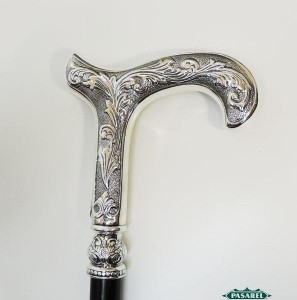
Products that combine silver with other materials are today a modern tendency. These items require a particularly delicate treatment. Silver combined with wood: the silver and wood may be cleaned only with soft and dry cloth. It is recommended not to engrave products integrating wood and silver. Do not use any cleaning agents.
Silver combined with leather: the silver and leather may be cleaned only with soft and dry cloth. It is recommended not to engrave products integrating leather and silver. Do not use any cleaning agents.
Silver combined with glass or crystal: the silver parts must always be cleaned as above, the glass must be washed and dried with a clean cloth. We recommend not to engrave objects made with two materials.
How to recognize good quality silver?
Rule Number 8
The quality of all silver must be closely checked. Hold the item in your hands and observe:
A year later – Another test you can perform to know the quality of a silver object is to be done a year after it is purchased. When you buy them, all silver objects are beautiful and shiny, but what has happened after a few months of use? Is it still shiny or has it turned dull? Is it scratched or bent out of shape?
A good quality silver object will maintain its beauty for many years, due to the thickness of the silver, the strength of its finish and the attention given to its smallest details.